Legal analysis
Unlocking the Potential of Legal Data Analysis: A Game-Changer for Modern Legal Operations
In the realm of legal operations, legal data analysis emerges as a game-changing player. Its surge in popularity comes as no surprise.
The legal landscape is fraught with complex cases and an enormous volume of data. The traditional approach of sifting through legal documents manually is gradually being replaced by more advanced, data-driven techniques.
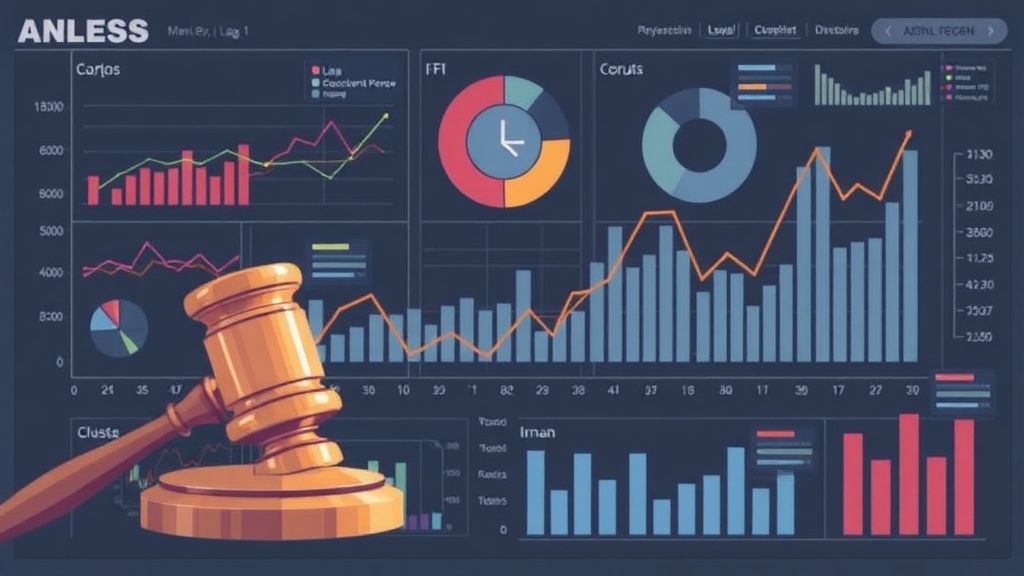
Legal data analysis refers to the process of extracting valuable insights from legal data. By employing techniques such as data mining and predictive analytics, legal data analysis unlocks the potential of data to streamline legal operations and provide actionable insights.
The Power of Data in Legal Operations
Legal operations, by their very nature, are data-intensive.
Each case brings with it a myriad of data points – from the details of the parties involved to the specificities of the case itself. This data carries untold potential for enhancing legal operations.
Legal data analysis brings this potential to life. It enables legal professionals to harness the power of data effectively, allowing faster, more informed decision-making.
By analyzing data, legal teams can identify patterns, predict outcomes, and even automate repetitive tasks.
In the courtroom, legal data analytics can help attorneys to predict a judge’s behavior or understand an opponent’s litigation strategies. Outside of the courtroom, it can assist in contract analysis, risk assessment, and case management.
The Role of Technology in Legal Data Analysis
Technology plays an instrumental role in legal data analysis. Advanced technologies like machine learning and natural language processing are increasingly being used in legal data analytics. These technologies parse through vast amounts of data, identify patterns, and glean insights that a human analyst might miss.
Natural language processing technology, for instance, enables the system to understand and interpret human language. It can analyze legal documents, contracts, and court proceedings, and extract relevant information.
This drastically reduces the time spent on manual data entry and document review, boosting efficiency.
Meanwhile, machine learning algorithms can predict possible legal outcomes based on past data. This predictive capability is particularly beneficial in litigation, where information about prior cases can influence the strategy for current ones.
The Challenges and the Way Forward
While legal data analysis is undoubtedly transformative, it also comes with its share of challenges.
The legal industry has been traditionally slow in adopting new technologies.
However, this has recently been changing as legal professionals increasingly recognize the benefits of data analysis.
Data privacy and security is another critical concern. Legal data often contains sensitive information.
Ensuring the privacy and security of this data is crucial, requiring robust cybersecurity measures.
Even with these challenges, the potential benefits of legal data analysis are too significant to ignore. By leveraging data effectively, legal professionals can enhance their operational efficiency, make informed decisions, and ultimately deliver better outcomes.
Legal data analysis is not just a passing trend. It is an integral part of the future of legal operations. With the right tools, training, and mindset, legal professionals can harness the power of data to revolutionize legal operations. As we move forward, it is clear that data and technology will play an increasingly critical role in shaping the legal landscape.